Snowy Plover
Anarhynchus nivosus
COPR Snowy Plover Program — the bottom of the page includes reports.
Snowy Plover chicks, terns, and shorebirds
Hello SB birders,
The most recent count of plover chicks surveyed at Sand's Beach, Coal Oil Point Reserve, was this morning, July 28, 2008. There were 28 chicks on the beach area and 2 broods of 3 chicks each in the delta or interior part of the slough that has dried out. We were scared that with pressures from skunk depredation, the plovers didn't have a chance this year. As it turns out, this season hasn't been a total failure after all!
Thanks!
Jen Stroh
Snowy Plover Docent Program Coordinator


Snowy Plover chick in the COPR nursery — May 24, 2008
This year there has been an especially difficult year with predators. The only surviving chicks at this date are the ones in the nursery.
Red-necked phalarope, Cliff Swallows, Least Tern, Snowy Plover chicks, Red-tailed Hawk chicks and parents with squirrel, Mallard chicks, Gopher snake, Devereux Slough

Devereux Slough open to the sea, Snowy Plovers, and Semipalmated Plovers
Coal Oil Point Reserve, Devereux Slough winter changes and reflections, Snowy Plovers — January 2008

Coal Oil Point Reserve — December 2007
Winter storm, piles of kelp, ducks, Eurasian Wigeon, diving pelicans, and banded Snowy Plovers

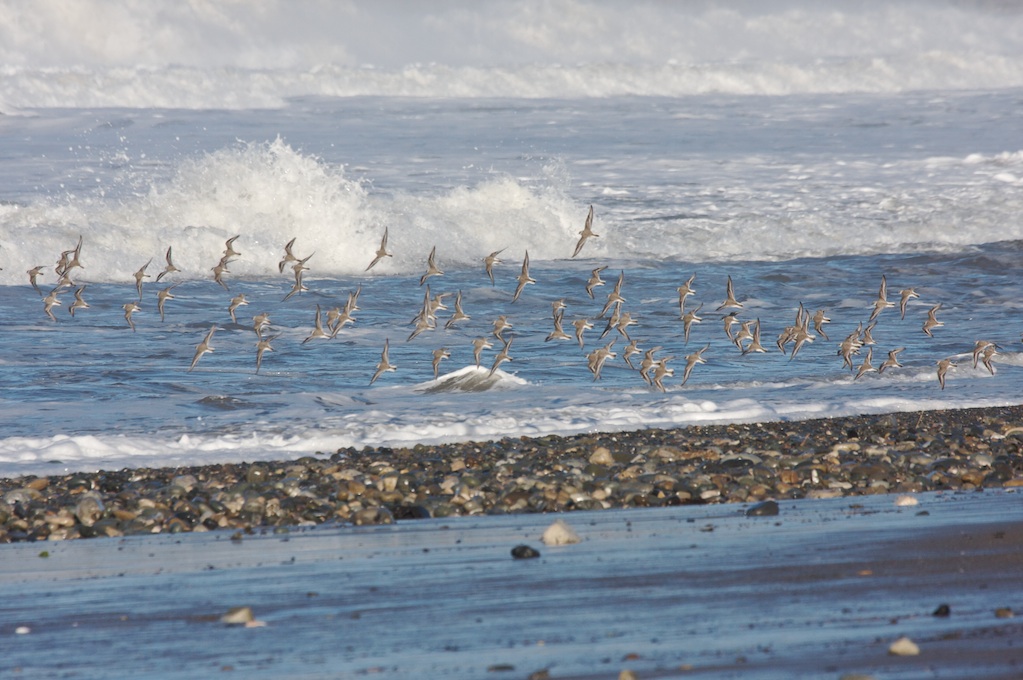
White-faced Ibis, banded Snowy Plovers and Terns, Willet, Marbled Godwit, Whimbrel, Long-billed Curlew, birds in flight, Venoco — Ellwood Terminal, birders, and Pectoral Sandpiper
Snowy Plover counts have ranged between 170 and 250 so far this fall.
July 28, 2007 — Update from Cris
The end of the breeding season is doing very well. There are 10 broods with 26 chicks on the beach and 5 eggs in the incubator, due next week. We have learned an interesting thing about the wood egg replacement experiment. On the last nest at post 10, I brought back 2 chicks and 1 egg. The chicks were already walking because they hatched in the night instead of the typical morning time. When I placed the 2 chicks and egg in the nest, the parents would not go back; they were nervous about the chick. I then tried another nest to see if it was a problem with those particular parents or with the chicks being 12 hours old. When I placed them on the other nest, the female accepted them but the male attacked them. We know now that we have a narrow window of time to replace the eggs. Ideally it would be when I can hear the chicks pipping inside of the egg and when the chick is still wet from hatching. The 2 chicks that were rejected are being raised in our nursery by the dedicated chick team.

Coal Oil Point Reserve — June 24 through July 14, 2007
White-tailed Kite, Beach Hoppers, Long-billed Curlew, Mallard with chicks, Red-winged Blackbird, Great Blue Heron, Great Egret, Snowy Plover chicks, Black-necked Stilts, and Beach Hoppers (Sand Fleas)

June 28, 2007
I went for a wonderful summer walk on the beach. While looking at the plovers and other birds, I ran into Cris. She was checking up on the Snowy Plover nests where she had put wooden eggs. No solution to the skunks has been found, so it was decided to replace the eggs with wooden eggs. The Snowy Plover eggs are taken up into the nursery and incubated. When the eggs are ready to hatch you can hear peeping. This will help with knowing when to bring the protected eggs back to their nests where they can hatch and be looked after by their parents.
Wonderful summer day checking on the birds at Sands, COPR dunes — June 22, 2007 — Snowy Plovers and Least Terns
June 21, 2007 — The skunk predation is a continuing problem with the nests and chicks at COPR. There are at least two Least Tern nests. Last count for the Snowy Plover chicks was 11.
U.S. Fish & Wildlife Service Snowy Plover page — this site includes information regarding the official status, critical habitat, recovery plan, threats, range, life history, and conservation needs of Snowy Plovers along the Pacific coast.
Comparison of the 2006 and 2007 summer Snowy Plover surveys of the Pacific coast (Excel file)
Hi all,
This is the nest update of June 5, 2007.
The big news: we have 2 Least Tern nests.
Plovers:
1) Seven plover chicks have fledged.
2) Several broods hatched in the last week. My best count was on May 30. On that day there were 8 broods of small chicks totaling 16 chicks.
3) Today there were 11 nests. It has been difficult to track chicks because the beach was narrow and the chicks hide in the vegetated dunes. The beach finally started to broaden on May 30, 2007. I am hoping to move the fence closer to the ocean next week. This will make it easier to count and photograph chicks because they will have more flat sand to forage.
4) In the plover nursery, we raised and released 1 chick. Of the other 10 eggs that we collected, 4 were infertile and 6 had dead embryos. It is quite unusual to have low hatchability and we need to find out why chicks are dying in the egg. It is possible that when chicks are at a crucial time of hatching, they must be kept warm or they die. Also, it is possible that the incubator is infected with bacteria. My friend who works with show chickens said that I need another type of incubator that can be disinfected regularly. I will look into that.
5) One of our last year's nursery chicks, banded as PA:AR, was courting a male by the docent chair.
Cris

Snowy Plover chicks, Sanderlings, Bullock's Oriole, Western Grebe, Mark Holmgren, Deer, House Finch, Scrub Jay, Grasshopper Sparrow, Red-tailed Hawk, Phainopepla, and the Farren Road area

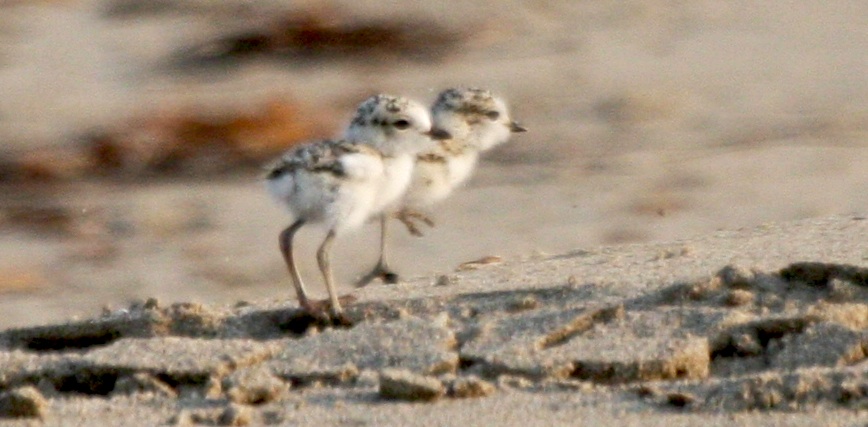
Snowy Plover chicks
As usual, the Snowy Plover season has had a bumpy start, but the four chicks that are on the beach today seem to be doing well. Earlier in the season many of the nests were raided by skunks. Big winds may have caused problems with the nests as well. Some eggs were abandoned and one chick was found without any parents watching it. Those eggs and the one orphan chick are currently in the Snowy Plover nursery. — CB, April 29, 2007
Video of Snowy Plover chicks hatching at Coal Oil Point Reserve